How to Find the Resultant of Two Vectors
Now putting the values of eq 1 and eq 2 in eq 3. How to Find the Resultant Vector of any Two Vectors.
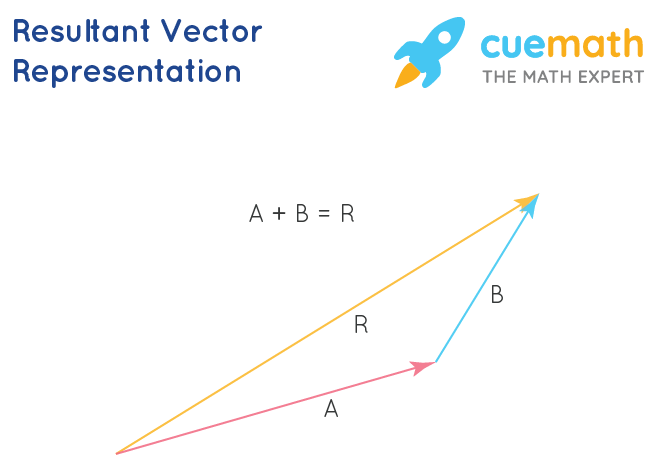
Resultant Vector Formula Learn To Find The Resultant Vector
The resultant of two forces is simply the vector sum of the individual forces in a system.
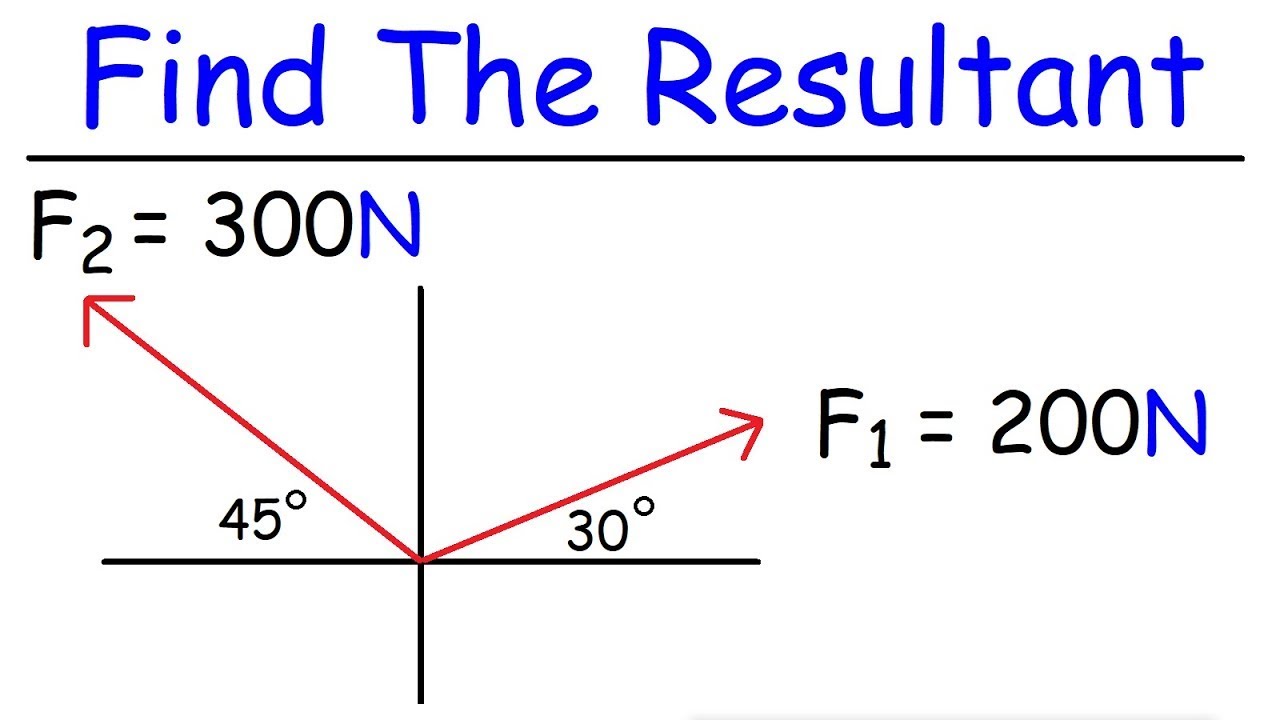
. The magnitude r of the resultant vector is then the net acceleration and is given by. Determine the resultant displacement of the hiker. Addition of Vectors by Means of Components.
The resultant of two forces can be found using the methods for adding vectors when the vectors are a geometric representation. The resultant of two vectors can be found in many ways. There is a particular module in the DATS software that takes a tri-axial group of signals three signals and generates the resultant magnitude as shown below.
Notice that this is not a mere sum of the magnitudes of the forces but the sum of the forces taken as vectors which is more involved because vectors have both a magnitude and a direction that we need to consider when doing the sum. When vectors represent forces their sum is called the resultant. The vector C is called the sum the result or the resultant vector.
11 2 11 2 c 2. Lets call this force eqF_1. Add answer 5 pts.
Steps to Find the Magnitude and Direction Angle of the Resultant Force of Two Vectors. The resultant of two vectors vec A and vec B perpendicular to the vector vec A and its magnitude id equal to half of the magnitude of the vector asked Jun 5 2019 in Physics by KritikaSahu 815k points class-11. Draw the second vector to scale in the desired direction beginning where the head of the first vector stops.
The following diagram shows the resultant of. C Using the head to tail method draw the resultant d Consult todays handout to solve for the resultant. R F 1 F 2.
Find the vector. The head to tail method is way to find the resultant vector. Draw a line from the tail of the first vector to the head of the last vector as the resultant.
This new vector represents your complete trip from start to finish. Resultant of vectors can be found using the law of cosines. You can use the Pythagorean theorem in the form c2 a b2 or R2 Rx2 Ry2 when the angle between the two vectors is a right angle.
When using methods for the algebraic representation to find the resultant of two forces it can be helpful to understand the components of a force. In other words C A B. On the diagram label the magnitude and direction of this vector.
R RX RX eq 3. Take the sum of two vectors by creating a new vector. R Rx 2 Ry2 R Ax BX 2 Ay BY2 By rectangular components direction.
R AX BX AY BY By rectangular component the magnitude of the resultant vector is given as. In this example x y and z accelerations were captured and. A 2 b 2 c 2.
Find the magnitude and the direction angle of one of the two forces. Where i j and k are unit vectors in the x y and z directions. If the vector R makes an angle alpha with vector A then alpha arctan B Cos thetaA B Sin theta.
To find the resultant of two vectors in component form just add the x components of each and the y components of each. C 156 km. Brought to you by.
B Have everyone draw the vectors. The term resultant force pertains to the result only if two exact vector quantities are added. Can the resultant of two vectors 8 units and 4 units be equal to.
A Select the vector representative to depict the vector using hisher body. Find the resultant vector or the vector sum by drawing a vector from the initial point of the first vector to the terminal point of the last vector we added. This vector should be labeled Resultant or simply R.
There can also be resultant displacement resultant velocity if two velocities are added and could also be resultant momentum. If A and B are two vectors with an angle between them equal to theta theta pi their resultant R is given by R A2 B2 2AB Cos theta12 this gives the magnitude of R. The angle labeled as theta Θ is the angle between the resultant vector and the west axis.
R is the resultant Rx is the first vector in the x-axis and Ry is the vector in the y-axis.

Resultant Of Two Vectors Derivation Youtube

Find The Magnitude And Direction Of The Resultant Of Two Vectors A And B In The Terms Of Their M Youtube

Vector Application Find Magnitude And Angle Of The Resultant Force Youtube
How To Find The Resultant Of Two Vectors Youtube


Comments
Post a Comment